Middling in Sports Betting: The Math Behind the Most Profitable Play

.png&w=3840&q=75)
Key Takeaways
- The Definition: Middling is placing bets on opposite sides of the same event at different lines to create a 'gap' where both bets can win.
- The Risk Profile: A properly executed middle carries low risk (usually just the cost of the vig) with a high potential reward (winning both units).
- Key Numbers are Critical: In the NFL, targeting middles around 3 and 7 maximizes Expected Value (EV) due to the frequency of these margins.
- Live Betting Opportunities: In-game volatility often creates wider middle windows than pre-game markets, especially on totals.
- Bookmaker Diversity: Never execute both legs of a middle at the same sportsbook to avoid account limitations; use different 'outs'.
Definition
Middling is a sports betting strategy where a bettor places wagers on opposite sides of the same event at different lines, aiming to exploit a gap (the "middle") in the point spread or total. If the final score lands within this gap, the bettor wins both wagers; if not, the loss is typically limited to the vigorish (juice).
Table of Contents
Middling is widely considered the holy grail of sports betting mechanics. While arbitrage guarantees a small profit regardless of the outcome, and +EV betting relies on the law of large numbers to realize equity over time, middling offers something far more explosive: the potential to win both sides of a wager while risking only a fraction of a unit.
It is a strategy of precision, relying heavily on line shopping, timing, and an acute understanding of market liquidity and key numbers. For the professional bettor, a middle is not a gamble; it is a calculated mathematical discrepancy in the market that offers asymmetric upside.
The Anatomy of a Middle#
To understand a middle, you must first understand market inefficiency over time. Lines move. They move due to sharp money, injury news, or public sentiment. A middle occurs when you capitalize on this movement to create a window of opportunity.
The Mechanism
Imagine the following scenario in an NFL game between the Kansas City Chiefs and the Baltimore Ravens.
- Early Week: You bet on the Chiefs -2.5 (-110).
- Late Week: News breaks that the Ravens' starting safety is out, and sharp money floods in on Kansas City. The line moves to Chiefs -5.5.
- The Counter: You now bet on the Ravens +5.5 (-110).
You are now holding two tickets:
- Ticket A: Chiefs -2.5
- Ticket B: Ravens +5.5
The Outcomes
There are three possible outcomes for this pair of bets:
- Chiefs win by 6 or more: You win Ticket A (Chiefs -2.5) and lose Ticket B (Ravens +5.5). You break even, minus the vig (roughly 4.5% loss on total handle).
- Chiefs lose or win by 2 or less: You lose Ticket A and win Ticket B. Again, a wash minus the vig.
- The Middle (Chiefs win by 3, 4, or 5): You win BOTH tickets.
This is the "middle." You have effectively purchased a lottery ticket with a high probability of cashing, where the cost of the ticket is merely the juice on the losing bet.
The Math: Calculating the Value of a Middle#
Sharps do not guess; they calculate. To determine if a middle is profitable, you must weigh the cost of the middle (the vig) against the probability of the score landing in the gap.
If you bet $110 to win $100 on both sides, your total risk is minimal.
- Cost: If the middle misses, you lose $10 ($100 win - $110 loss).
- Reward: If the middle hits, you win $200 ($100 win + $100 win).
The risk-to-reward ratio is 1:20. Therefore, for this middle to be +EV, the probability of the score landing on 3, 4, or 5 must be greater than roughly 5% (1/21).
In the NFL, the margin of victory lands on 3 roughly 15% of the time, and on 4 or 5 roughly 6-7% of the time combined. The total probability of hitting this specific middle is over 20%.
The math is undeniable: Buying a 20% probability outcome for a price that implies a 5% probability is a massive edge.
Key Numbers: The Engine of NFL Middles#
Not all middles are created equal. In lower-scoring sports like the NFL, specific margins of victory occur with statistically significant frequency. These are known as Key Numbers.
Attempting to middle a game through "dead numbers" is a leak in your bankroll. You generally want your middle window to capture the following integers:
- 3: The most common margin of victory (approx. 15%).
- 7: The second most common margin (approx. 9%).
- 6, 10, 14: Secondary key numbers.
The "Dead Number" Trap
Consider a line moving from -8.5 to -11.5.
- Your Middle: 9, 10, 11.
- Value: While 10 is a key number, 9 and 11 are exceedingly rare margins.
Compare this to a line moving from -2.5 to -3.5.
- Your Middle: 3.
- Value: Even though the window is only one number wide (0.5 on either side), that single number (3) is worth far more than the combined probability of 9 and 11.
Pro Tip: Always consult a distribution chart for the specific sport you are betting. NBA middles require much wider gaps (often 4-6 points) to have the same value as a 1-point gap in the NFL, due to the high variance and scoring frequency of basketball.
Live Betting: The Modern Middle Frontier#
While pre-game line movement offers the most stable middles, the explosion of in-game wagering has created the most lucrative environment for this strategy. Live lines overreact to variance. A favorite might go down by a touchdown early, shifting the spread dramatically.
The "Polish Middle"
In live betting, you will often encounter the "Polish Middle." This is the inverse of a standard middle. Instead of betting sides to trap a number, you are usually betting totals (Over/Under) where you take the Over at a low number and the Under at a high number, but with a twist: the risk is higher.
However, the term is more accurately applied to situations where you have a gap where you can lose both bets, but a much wider window where you win both.
- Bet 1: Over 45.5
- Bet 2: Under 44.5
- Result: If the score lands on 45, you lose both bets.
Wait, why would you do this? Usually, this happens unintentionally when chasing bad lines. Avoid Polish Middles unless the odds provided offer a massive arbitrage opportunity that offsets the risk of the gap.
Dynamic Live Middles
The more common live strategy is the standard middle.
- Pre-game: You bet Over 210.5 in an NBA game.
- Halftime: The teams score 130 points in the first half. The live total skyrockets to 235.5.
- The Play: You bet Under 235.5.
You now have a massive 25-point window (211 to 235). If the pace slows down (regression to the mean), you win both. If the pace continues, you split.
To spot these opportunities in real-time without being glued to the screen, utilize the Live +EV Feed on EdgeSlip. It tracks real-time discrepancies across major books, highlighting when a live line has drifted far enough from the market consensus to create a viable middle or arbitrage opportunity.
Execution: When to Pull the Trigger#
Identifying a middle is easy; executing it requires discipline. You should not attempt to middle every game where the line moves.
Calculate the Cost of the Middle
You must account for the "vig." If you are betting at -110 on both sides, you are paying a tax to enter the middle. If the probability of the middle landing does not exceed the implied probability of the vigorish loss, do not make the bet.
Bankroll Management
Middling increases your handle (total amount wagered) without necessarily increasing your risk of ruin, provided you are arbitrage-neutral or better. However, it ties up liquidity. Ensure your bankroll is sufficient to cover the double exposure until the game settles.
Sportsbook Limiting
Consistently betting both sides of a game at the same sportsbook is a quick way to get flagged as a sharp or a bonus abuser.
- Rule of Thumb: Never middle at the same book. Place your initial wager at Book A and your counter-wager at Book B. This is essential for longevity.
Middles vs. Hedges#
It is vital to distinguish between middling and hedging, as their objectives are diametrically opposed.
- Hedging is a defensive move designed to reduce risk and lock in a smaller guaranteed profit, often at the expense of maximum EV.
- Middling is an aggressive move designed to increase expected value by exposing yourself to a high-upside "jackpot" scenario while accepting a break-even (or slight loss) baseline.
Example: You have a futures bet on a team to win the Super Bowl at +5000. They reach the final game.
- Hedging: You bet against them to guarantee a payout regardless of the result.
- Middling: You bet against them at a specific spread that allows you to win the future and the hedge. (e.g., You have Team A to win; you bet Team B +7.5. If Team A wins by 3, you win the massive future and the spread bet).
Advanced Middles: Totals and Props#
While spreads get the glory, totals (Over/Under) and player props offer frequent middling opportunities due to lower market liquidity and higher variance in pricing between books.
Player Prop Middles
Sportsbooks often disagree on player projections.
- Book A: LeBron James Over 26.5 Points (-115)
- Book B: LeBron James Under 29.5 Points (-110)
Here you have a 3-point middle (27, 28, 29). In player props, landing on a specific number is less predictable than NFL key numbers, but the gaps are often wider because the markets are less efficient.
Summary: The Sharp's Edge#
Middling is not a passive strategy. It requires:
- Speed: Hitting the second leg of the bet before the market corrects.
- Accounts: Funding at multiple sportsbooks (Outs) to shop for the best counter-line.
- Math: Understanding that paying the vig is an investment in a high-probability payout.
The recreational bettor fears the line movement. The sharp bettor anticipates it. By positioning yourself on the right side of the opening number, you grant yourself the option—but not the obligation—to middle.
Start tracking line movements early in the week. Identify the key numbers. And when the market overcorrects, be ready to strike.
Frequently Asked Questions
What is the difference between middling and hedging?▼
Is middling in sports betting risk-free?▼
What are the best sports for middling?▼
How do you calculate the profitability of a middle?▼
What is a Polish Middle?▼
Related Articles
Football Squares Rules: The Definitive Analytics & Strategy Guide
Master football squares with this data-driven guide. Learn the rules, optimal number probabilities, auction valuation strategies, and how to gain an edge in high-stakes pools.
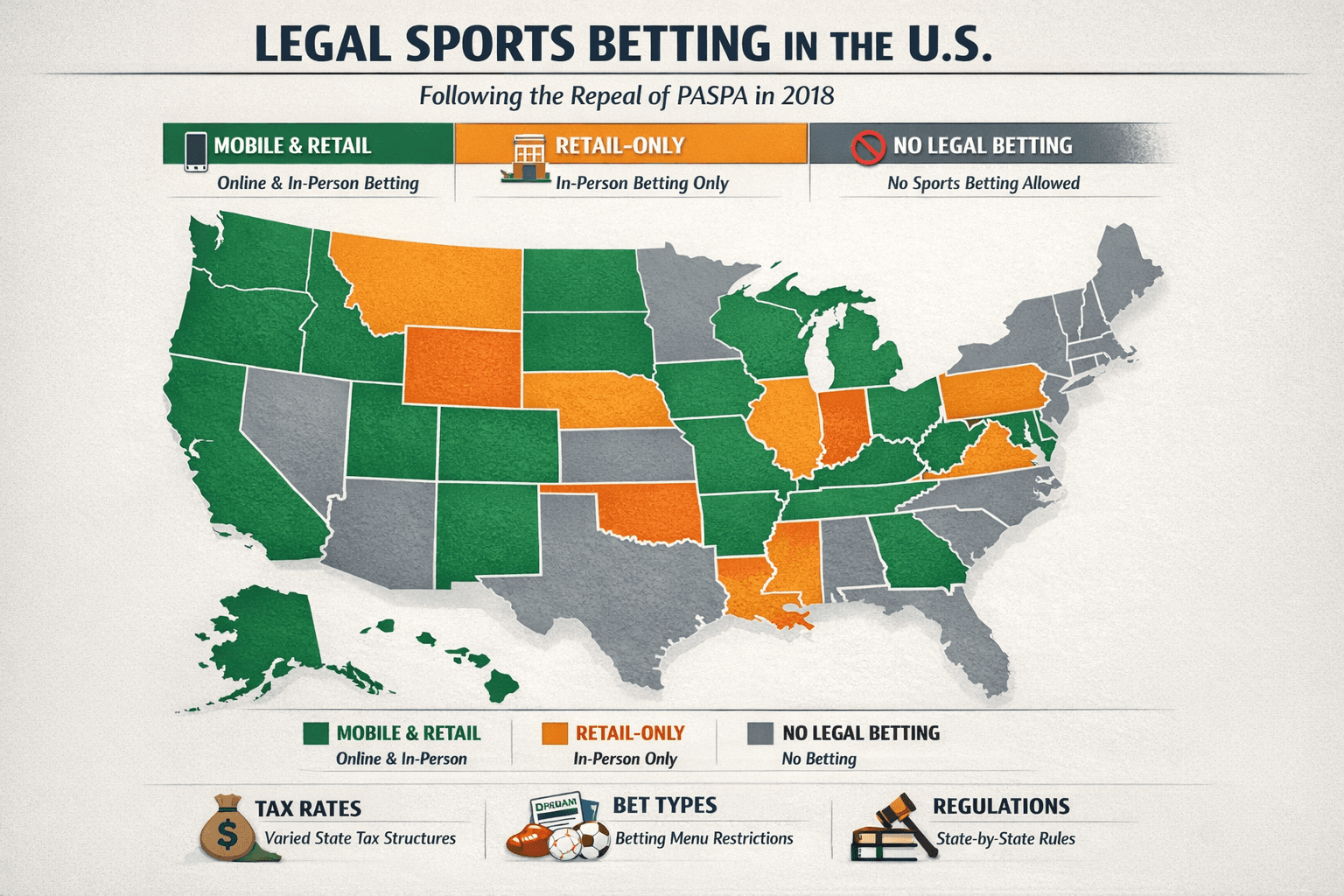
Legal Sports Betting States: 2026 Definitive Sharps Guide
The complete 2026 map of legal US sports betting. Analysis of mobile vs. retail markets, tax impact on odds, prop restrictions, and legislative forecasts.
Alt Markets Explained: Exploiting Derivatives for +EV Betting
Master alternate betting markets. Learn how sharps exploit pricing inefficiencies in alt spreads, totals, and props to find edge beyond the main lines.
How to Find Expected Value (+EV): The Mathematical Edge
Stop guessing and start trading. Learn how to find Expected Value (+EV) in sports betting using probability theory, market de-vigging, and line shopping.
Ready to find your Edge?
Join thousands of smart bettors who have stopped guessing and started calculating. Access institutional-grade tools for the price of a standard wager.