Money Line Betting: The Mathematical Guide to Finding +EV

Key Takeaways
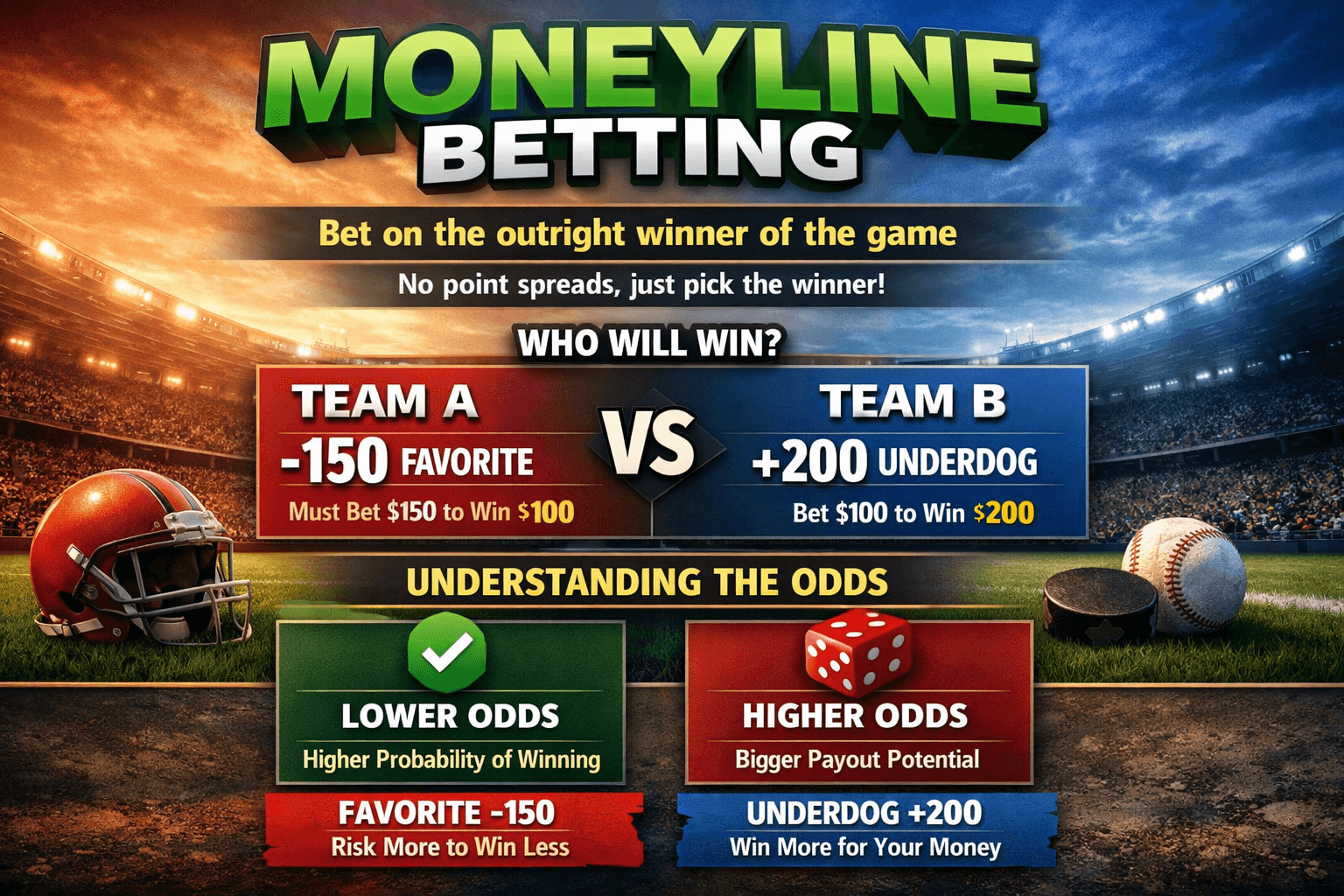
- The Definition: A Money Line bet is a wager on the outright winner of a contest, where the payout is adjusted based on the odds rather than a point spread.
- Implied Probability: Every Money Line price converts to a percentage chance of winning. You must calculate this to ensure your 'True Win Probability' exceeds the market's implied probability.
- The Tax on Favorites: Betting heavy favorites (e.g., -300) requires an exceptionally high win rate (75%+) just to break even, making them risky for long-term ROI.
- Sport Specifics: MLB and NHL are primarily Money Line sports where 'Listed Pitchers' or Goaltenders dictate the value, whereas NFL bettors must weigh the value of key numbers (spread) vs. outright wins.
- Line Shopping: Because Money Line odds vary significantly between books (e.g., +130 vs +145), having accounts at multiple sportsbooks is the easiest way to increase profitability.
Definition
A money line bet is the simplest wager in sports betting, requiring the bettor to select the outright winner of a contest. Unlike point spreads, there is no handicap to cover; however, the payout odds vary significantly based on the implied probability of each side winning.
Table of Contents
In the lexicon of recreational betting, the money line is often dismissed as "picking the winner." For the professional bettor, however, the money line is a mathematical derivative of win probability. It is not a question of who will win, but rather what price you are willing to pay for that outcome.
While the point spread acts as a great equalizer, attempting to bring a contest to a 50/50 proposition, the money line (ML) is a direct market valuation of a team's chances. To operate profitably in this market, you must move beyond team loyalties and narrative-based handicapping. You must view the money line through the lens of implied probability, market hold, and Expected Value (+EV).
This guide will deconstruct the mechanics of the money line, the math required to beat it, and how to utilize tools like the Line Shopper to exploit market inefficiencies.
The Mechanics of American Odds#
To trade money lines effectively, you must be fluent in American Odds. This format centers around the number 100 and uses positive (+) and negative (-) integers to dictate risk and reward.
The Favorite (Negative Odds)
A negative number (e.g., -150) indicates the favorite. The number represents how much you must wager to win $100.
- Example: -150 Money Line.
- Risk: $150
- Reward: $100
- Total Payout: $250
The Underdog (Positive Odds)
A positive number (e.g., +130) indicates the underdog. The number represents how much you will win on a $100 wager.
- Example: +130 Money Line.
- Risk: $100
- Reward: $130
- Total Payout: $230
The Pick'em (PK or EVEN)
Occasionally, the market views two teams as perfectly matched. In this scenario, both sides may be listed at -110 (standard juice) or "EVEN" (+100), meaning there is no favorite or underdog.
The Most Important Metric: Implied Probability#
The single greatest failure of amateur bettors is making decisions based on "feel" rather than probability. Every money line price converts directly into an Implied Probability—the percentage chance of winning that the sportsbook is assigning to that team (including their fee).
If your calculated "True Win Probability" is higher than the sportsbook's "Implied Probability," you have identified a +EV wager.
Converting Negative Odds to Probability
For favorites (e.g., -200):
Using -200:
Converting Positive Odds to Probability
For underdogs (e.g., +150):
Using +150:
Strategic Insight: If you bet on a +150 underdog, you do not need them to win 50% of the time to be profitable. You only need them to win more than 40% of the time. This is the foundation of Break-Even Analysis.
Understanding the Vig (The Juice)#
If you sum the implied probabilities of both sides of a money line, you will notice they exceed 100%.
Example: NFL Game
- Kansas City: -160 ($61.54%$)
- Buffalo: +135 ($42.55%$)
- Total Market Percentage: $61.54% + 42.55% = 104.09%$
That extra $4.09%$ is the Overround or Vig. It represents the sportsbook's theoretical margin. To find the true odds (the fair market price without the fee), you must remove this vig.
Professional bettors use "No Vig" calculators to determine the fair price. In the example above, the "Fair Odds" (True Probability) for Buffalo are actually closer to +145. If you are betting them at +135, you are paying a tax. However, if another book is offering Buffalo at +150, you have found positive expected value.
Money Line vs. Spread: The Conversion#
A common dilemma for sharps is deciding between the Spread and the Money Line. Is it better to take the underdog at +3.5 points (-110) or on the money line at +160?
There is no universal answer, as it depends heavily on the sport and the specific number (key numbers in NFL). However, general distribution curves allow us to correlate spreads to money lines.
| Spread | Approx. Favorite ML | Approx. Underdog ML |
|---|---|---|
| -1 | -120 | +100 |
| -3 | -160 | +140 |
| -6 | -260 | +215 |
| -7 | -330 | +270 |
| -10 | -500 | +400 |
The "Tax" on Favorites Notice that as the spread increases, the money line price for the favorite skyrockets non-linearly. To bet a -7 favorite on the Money Line (-330), you must win 76.7% of your bets just to break even. Often, the spread offers better value on heavy favorites, while the money line offers higher EV variance on slight underdogs.
Sport-Specific Money Line Nuances#
Money line betting is not uniform across all sports. The dynamics change based on scoring frequency and draw probabilities.
1. The "Money Line Sports" (MLB & NHL)
Baseball and Hockey are primarily money line sports. Because the margins of victory are so slim (often one run or goal), the "Run Line" or "Puck Line" (usually set at 1.5) fundamentally changes the bet structure.
- MLB Pitching: In baseball, the money line is inextricably linked to the starting pitcher. Always verify if "Action" (bet stands regardless of pitcher) or "Listed Pitchers" (bet voids if pitcher changes) is selected. Sharps almost always play Listed Pitchers to preserve their EV.
- NHL Regulation vs. OT: Be wary of "3-Way" lines in hockey which exclude overtime. A standard NHL money line includes OT/Shootout. A 3-Way line treats a tie at the end of regulation as a loss for both team backers.
2. Soccer: 3-Way vs. 2-Way
Soccer is the most complex money line market.
- 1X2 (3-Way Money Line): You can bet Team A, Team B, or the Draw. If the match ends in a draw and you bet Team A, you lose.
- Draw No Bet (2-Way): This removes the draw option. If the match ends in a draw, your stake is refunded (Push). The odds will be significantly lower (worse payout) than the 3-Way line because the risk is reduced.
3. NFL and Key Numbers
In the NFL, the difference between -3 and -2.5 is massive, but the money line removes that stress. However, blindly betting money line underdogs in the NFL is a high-variance strategy. Sharps look for "market compression"—where the spread suggests a close game (e.g., +3), but the public has pushed the money line price down, creating value on the dog.
Advanced Strategy: Synthetic Hold and Line Shopping#
Because money lines vary wildly between sportsbooks, they present the best opportunities for Line Shopping.
If DraftKings has the Celtics at -140 and FanDuel has them at -130, betting at FanDuel saves you $10 for every $100 you want to win. Over a season, this reduction in "price paid" is the difference between profit and loss.
Synthetic Hold
Sophisticated bettors can create their own markets by shopping for the best price on both sides across different books.
- Book A: Team X (-120)
- Book B: Team Y (+130)
If you combine the best odds available (-120 and +130), the theoretical hold might drop to 1% or even become negative (an Arbitrage opportunity). Even if you don't arbitrage, calculating the synthetic hold of the entire market helps you identify which side is mispriced.
Common Pitfalls to Avoid#
1. The Heavy Favorite Trap
Recreational bettors love "safe" parlays of -400 favorites. This is a mathematical disaster.
- To break even on a -400 bet, you need an 80% win rate.
- In the NFL, favorites of -400 or higher historically win at a rate that barely hovers above break-even.
- When you parlay them, you compound the bookmaker's vig, increasing the cost of the trade without increasing your edge.
2. Ignoring Contextual Variables
A money line price assumes a vacuum, but games are played in reality.
- Injuries: In the NBA, a star player sitting out shifts the win probability drastically.
- Motivation: Late-season games for teams eliminated from playoffs often result in skewed money lines where motivated teams are overpriced.
3. Chasing Steam
"Steam" is when sharp money hits the market and moves the line. If a line moves from +120 to +100, and you bet it at +100, you have missed the value. You are betting the same outcome at a worse price. If you miss the "best of the number" (CLV), it is often better to pass on the bet entirely.
Conclusion#
The money line is the rawest form of sports investment. It strips away the handicap and asks a simple question: Is the market underestimating this team's probability of winning? By rigorously converting odds to implied probabilities and comparing them against your own models or the EdgeSlip Live Feed, you can identify discrepancies in the market.
Remember: You are not betting on teams; you are betting on numbers. A team is a "lock" at +150 and a "pass" at -150. Respect the price, manage your bankroll, and always shop for the best line.
Frequently Asked Questions
What does a negative number mean on a money line?▼
What happens to a money line bet if the game ends in a tie?▼
Is it better to bet the money line or the spread?▼
How do you calculate implied probability from money line odds?▼
What is the 'juice' or 'vig' in money line betting?▼
Related Articles
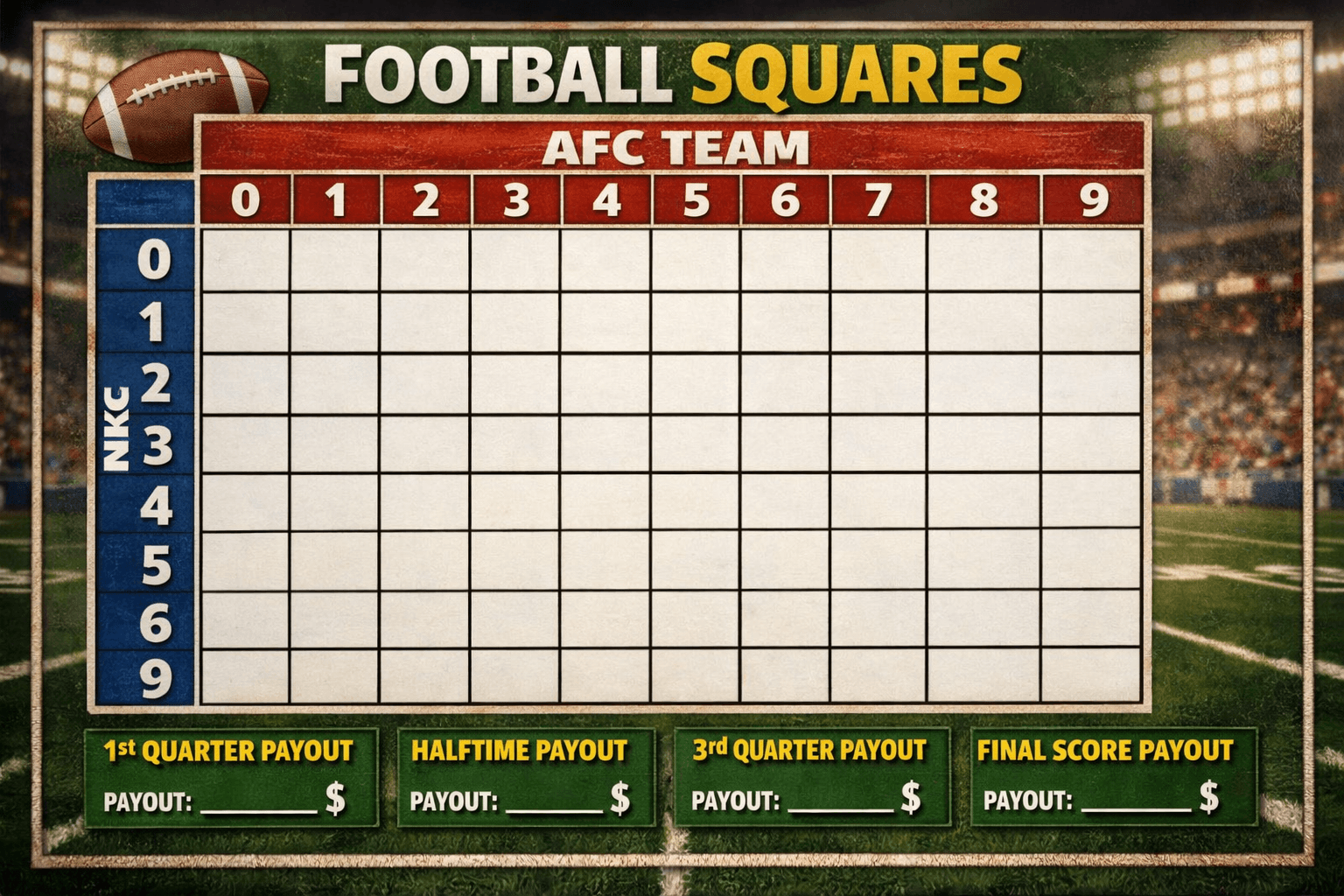
Football Squares Rules: The Definitive Analytics & Strategy Guide
Master football squares with this data-driven guide. Learn the rules, optimal number probabilities, auction valuation strategies, and how to gain an edge in high-stakes pools.
.png&w=3840&q=75)
Middling in Sports Betting: The Math Behind the Most Profitable Play
Master the art of middling. Learn how to exploit line movements to create risk-free windows where you win both sides of a bet. Advanced strategy for sharps.
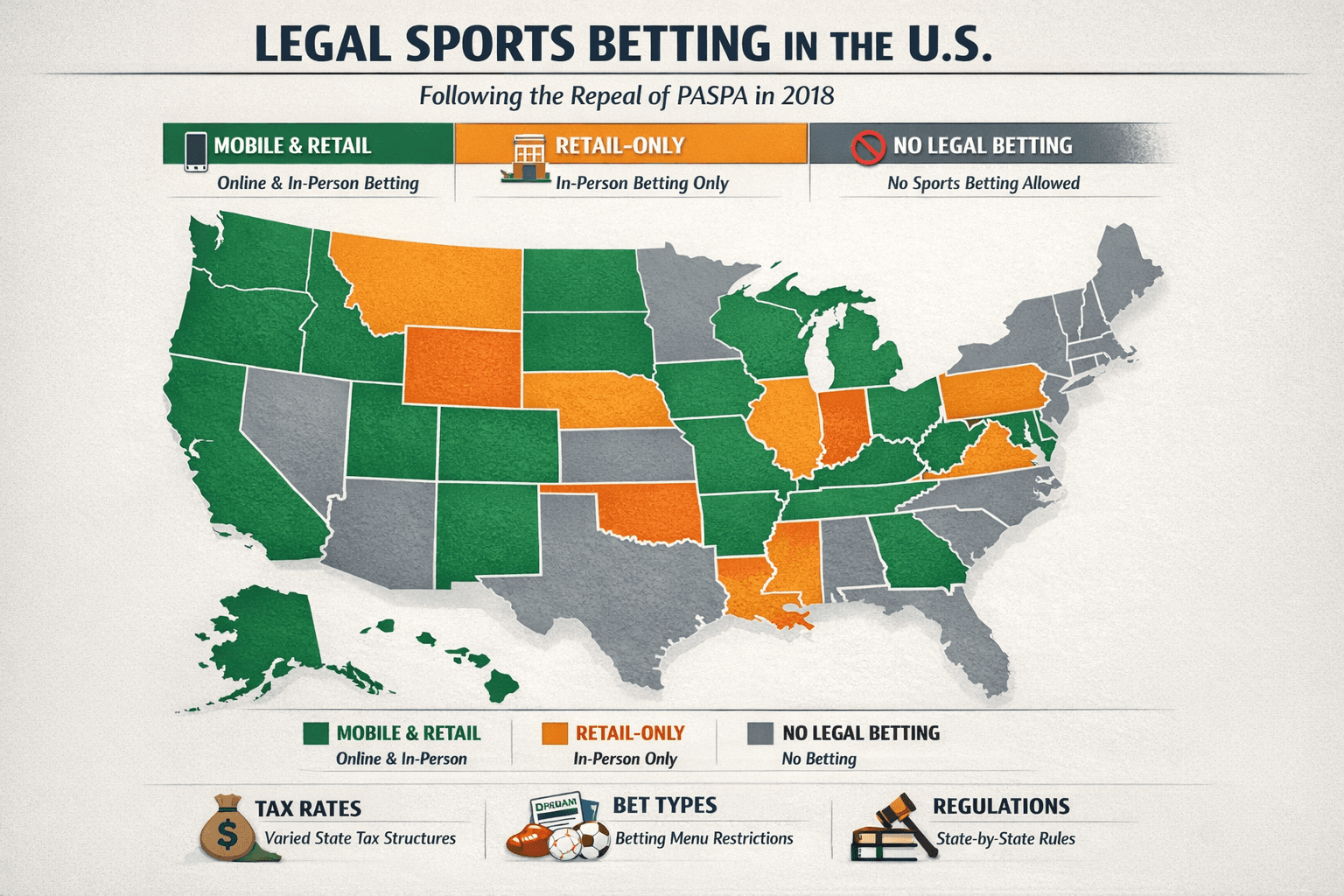
Legal Sports Betting States: 2026 Definitive Sharps Guide
The complete 2026 map of legal US sports betting. Analysis of mobile vs. retail markets, tax impact on odds, prop restrictions, and legislative forecasts.
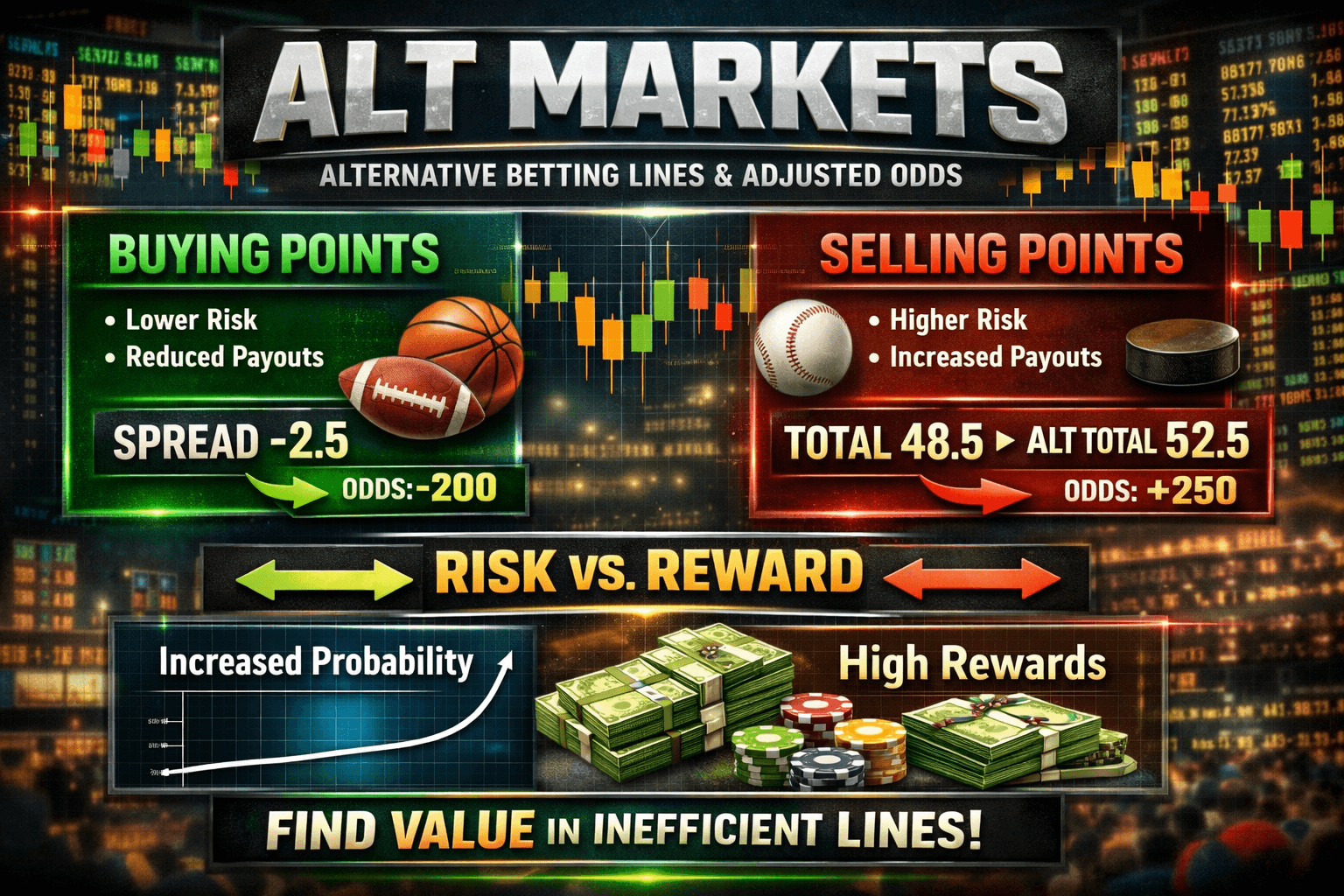
Alt Markets Explained: Exploiting Derivatives for +EV Betting
Master alternate betting markets. Learn how sharps exploit pricing inefficiencies in alt spreads, totals, and props to find edge beyond the main lines.
Ready to find your Edge?
Join thousands of smart bettors who have stopped guessing and started calculating. Access institutional-grade tools for the price of a standard wager.