Odds Bonus Strategy: Math, Traps & Maximizing EV

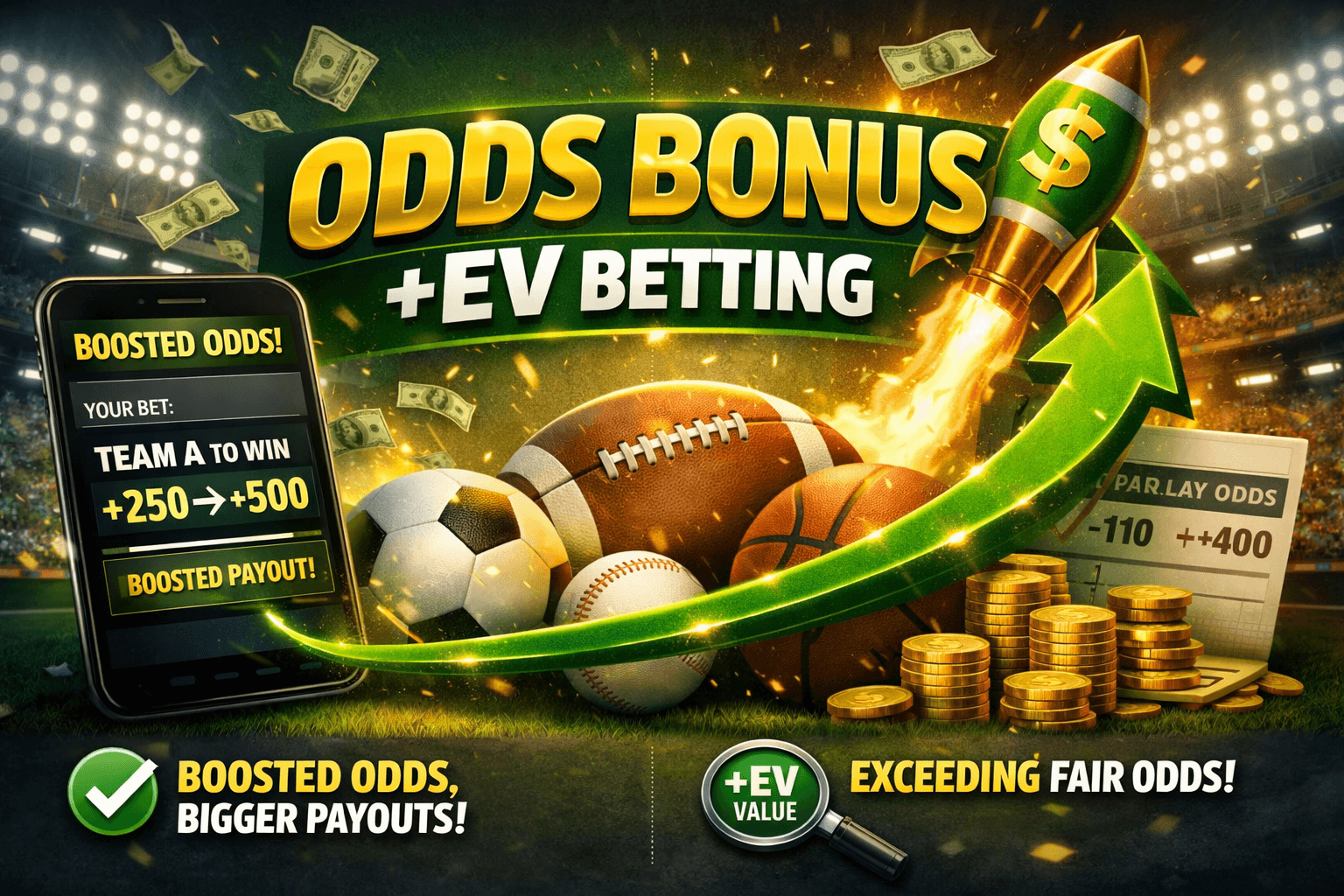
Key Takeaways
- The Definition: An odds bonus artificially inflates the payout of a wager; it is only valuable if the new price exceeds the 'fair' or 'no-vig' odds of the event.
- The Strategy: Apply percentage boost tokens to markets with low hold (like spreads and moneylines) and longer odds to maximize the mathematical Expected Value.
- The Trap: Beware of pre-packaged 'super boosts' on Same Game Parlays or correlated events, where the sportsbook may manipulate the original odds to make the boost appear larger than it is.
- The Calculation: Always de-vig the consensus line from sharp sportsbooks to find the true probability before determining if a boosted price offers a genuine edge.
- The Execution: While arbitrage (hedging) guarantees a small profit, betting 'naked' on +EV boosts generally yields a higher long-term ROI by avoiding the vigorish on the hedge side.
Definition
An odds bonus (often called an odds boost, profit boost, or surge token) is a promotional offer from a sportsbook that artificially increases the payout of a specific wager without altering the underlying probability of the event. For sharp bettors, these bonuses are a primary vehicle for generating positive Expected Value (+EV) if the boosted price exceeds the true "fair" odds.
Table of Contents
Retail sportsbooks are not in the business of giving away free money. Yet, every day, major operators flood their apps with "Odds Boosts," "Profit Surges," and "Super Boosts." For the casual bettor, these are fun additives to a parlay. for the sharp bettor, they represent one of the most consistent—albeit limited—sources of Positive Expected Value (+EV) in the current landscape.
However, not all boosts are created equal. A 25% profit boost on a market that is vigged at 30% still leaves you with a negative expectation wager. To exploit an odds bonus, you must move beyond the marketing language and analyze the underlying math. This guide covers the mechanics of odds bonuses, how to de-vig the lines to find the true price, and the strategies required to maximize your ROI while avoiding the "sucker boost" traps set by the books.
The Mechanics of the Odds Bonus#
At its core, an odds bonus improves the price you receive on a bet. If a line is typically -110 (1.91), a boost might move it to +125 (2.25).
There are generally two distinct mechanisms books use to apply these bonuses:
- Fixed Odds Boosts: The book selects a specific market (e.g., "Travis Kelce to Score a TD") and moves the line from -120 to +150. These are pre-packaged.
- Profit Boost Tokens: The book gives you a "token" (e.g., 25% Profit Boost) that you can apply to a wager of your choice, subject to certain constraints (minimum odds, specific sports, max wager limits).
The fundamental math remains the same for both: Does the new, boosted price exceed the "No-Vig" (Fair) Price of the event?
Calculating the Value of a Boost
To determine if an odds bonus is worth betting, you cannot simply look at the raw payout increase. You must compare the boosted odds against the sharpest market consensus.
Step 1: Find the Fair Price You need the true probability of the event occurring. You find this by looking at a sharp sportsbook (like Pinnacle or a betting exchange), finding the two-way line, and removing the vigorish (the book's fee).
- Example: You have a 50% Profit Boost token. You want to bet on the Knicks moneyline.
- Sharp Book Line: Knicks -135 / Opponent +115.
- Fair Win Probability: After removing the vig, the Knicks have roughly a 56.5% chance of winning.
- Fair Odds: -130 (1.77 decimal).
Step 2: Apply the Boost
- Your Book's Line: -140 (1.71 decimal).
- The Boost: 50% Profit Boost.
- Calculation: In decimal odds, a 50% boost applies to the winnings, not the stake.
- Formula:
(Decimal Odds - 1) * (1 + Boost %) + 1 - Math:
(1.71 - 1) * 1.50 + 1=0.71 * 1.50 + 1= 2.065 (+106).
- Formula:
Step 3: Compare
- Fair Odds: -130 (1.77)
- Boosted Odds: +106 (2.065)
Since your boosted price (2.065) is significantly higher than the fair price (1.77), this is a massive +EV wager. Over time, betting this discrepancy guarantees profit, mathematically speaking.
The "Sucker Boost": Identifying Traps#
Sportsbooks are excellent at pricing markets. When they offer a pre-packaged odds bonus ("LeBron James and Steph Curry both to score 25+ points, boosted from +200 to +250"), they often inflate the "original" odds to make the boost look generous.
The Original Odds Fallacy
Never trust the "was" price displayed on the banner.
- The Book Claims: "Was +200, Now +250!"
- Reality: If you built that same parlay manually in the Parlay Builder, the true price might only be +210. The boost to +250 is real, but the "value" isn't as high as advertised.
The Correlation Trap
Books love boosting Same Game Parlays (SGPs) where the legs are negatively correlated, or simply independent events presented as a narrative.
- Trap Example: "Chiefs to Win & Mahomes Under 200 Passing Yards."
- Why it's a trap: While possible, these events fight against each other. If the Chiefs win, Mahomes usually performs well. The books know the combined probability is lower than the public perception, allowing them to offer a "boost" that still has negative expected value.
Always run these scenarios through a Correlation Matrix or compare them against unboosted SGP pricing at sharp books before locking them in.
Strategy: Fixed Odds vs. Percentage Tokens#
Your approach should differ depending on whether the book dictates the market (Fixed Odds) or if you choose the market (Percentage Token).
Handling Fixed Odds Boosts
With fixed boosts (e.g., "Daily Super Boost"), the market is often a player prop. Because player prop markets are less liquid and more volatile:
- Check multiple sharp sources. One sharp book might be an outlier. Use a Line Shopper to see the consensus.
- Wait until close to gametime. Fixed boosts are often posted early. If news breaks (injury, weather), the fair value might plummet, turning a +EV boost into a -EV donation.
- Watch for Limits. These usually have low caps ($10, $25, or $50).
Optimizing Percentage Tokens
This is where the real edge lies. A "25% Profit Boost on any NBA bet" is a weapon if used correctly.
1. Aim for Longer Odds Mathematically, a percentage boost adds more Expected Value (in absolute dollar terms) to longer odds (underdogs) than shorter odds (favorites), assuming the +EV margin is similar.
- Boosting -200 to -150 gains you very little variance or raw profit.
- Boosting +200 to +250 is a significant jump in payout for the same risk profile.
2. Focus on Main Markets Apply your tokens to liquid markets (Spreads, Moneylines, Totals) rather than obscure props. The vig is lower on main markets (usually 4.5% to 5%), meaning it takes less "boost" to overcome the vig and get into +EV territory.
- Scenario: Applying a 25% boost to a market with 5% vig yields great value.
- Scenario: Applying a 25% boost to a First Basket Scorer market (which might have 30% vig) often barely gets you back to fair odds.
3. The Synthetic Hold Approach If you have access to a Live +EV Feed, you can filter for lines where your sportsbook is already offering a market-best price. Applying a boost to a line that is already +EV creates a "super-arb" or a massive value play.
Limits, Account Health, and "Worming"#
The biggest downside to odds bonuses is the limit. Books rarely let you bet thousands on a boosted price. They are loss leaders designed to increase engagement.
The "Max" Button
If a boost has a max bet of $50, should you bet $50?
- The Sharp View: Yes. If you have a quantified edge (e.g., 15% ROI), you should bet as much as the Kelly Criterion suggests, capped at the book's limit.
- The Account Health View: Consistently hitting the exact max on every single boost can flag your account as a "promo abuser." This can lead to being "gubbed" (limited or promo-banned).
"Worming" Strategy: To keep accounts healthy while exploiting bonuses:
- Mix in unboosted bets. Don't let your history be 100% boosted wagers.
- Round down. If the max is $50, bet $45 or $47. It looks less algorithmic.
- Bet the main lines. Books hate when you only snipe obscure props with boosts. Boosting an NFL spread is seen as less "predatory" by trading teams than boosting a niche player prop.
Arbitrage and Hedging Boosts#
Can you hedge an odds bonus to guarantee profit? Yes. Because odds bonuses often push the price well above the market rate, they frequently create Arbitrage opportunities.
- Book A (Boosted): +150 on Team X.
- Book B (Sharp): -130 on Team Y.
By betting on both sides proportionally, you can lock in a risk-free profit regardless of the outcome.
- Pros: Guaranteed money; builds bankroll variance-free.
- Cons: Requires liquidity at multiple books; sharp books may move lines quickly; betting exact hedge amounts can flag accounts.
Note: While arbitrage is mathematically sound, many sharps prefer to ride the variance of the naked boost (no hedge) if the EV is high enough, as hedging eats into the total long-term ROI (due to paying vig on the hedge side).
Summary: The Golden Rules of Boosting#
- Never assume a boost is +EV. De-vig the line against sharp books first.
- High Hold = Low Value. Avoid boosting markets with massive theoretical hold (like SGP or futures) unless the boost is massive (>50%).
- Longer Odds = Higher EV. All else being equal, apply percentage tokens to underdogs or parlays rather than heavy favorites.
- Manage your limits. Treat these as a long-term dividend to your bankroll, not a get-rich-quick scheme.
The odds bonus is the most accessible tool in the bettor's arsenal for overcoming the sportsbook's house edge. By stripping away the marketing gloss and focusing on the raw implied probabilities, you can turn these daily offers into a consistent, mathematically proven revenue stream.
Frequently Asked Questions
What is the difference between an odds boost and a profit boost?▼
Are odds bonuses always profitable?▼
Should I hedge my odds boosts?▼
How do I calculate the fair value of an odds boost?▼
Why do sportsbooks limit how much I can bet on boosts?▼
Related Articles
Football Squares Rules: The Definitive Analytics & Strategy Guide
Master football squares with this data-driven guide. Learn the rules, optimal number probabilities, auction valuation strategies, and how to gain an edge in high-stakes pools.
.png&w=3840&q=75)
Middling in Sports Betting: The Math Behind the Most Profitable Play
Master the art of middling. Learn how to exploit line movements to create risk-free windows where you win both sides of a bet. Advanced strategy for sharps.
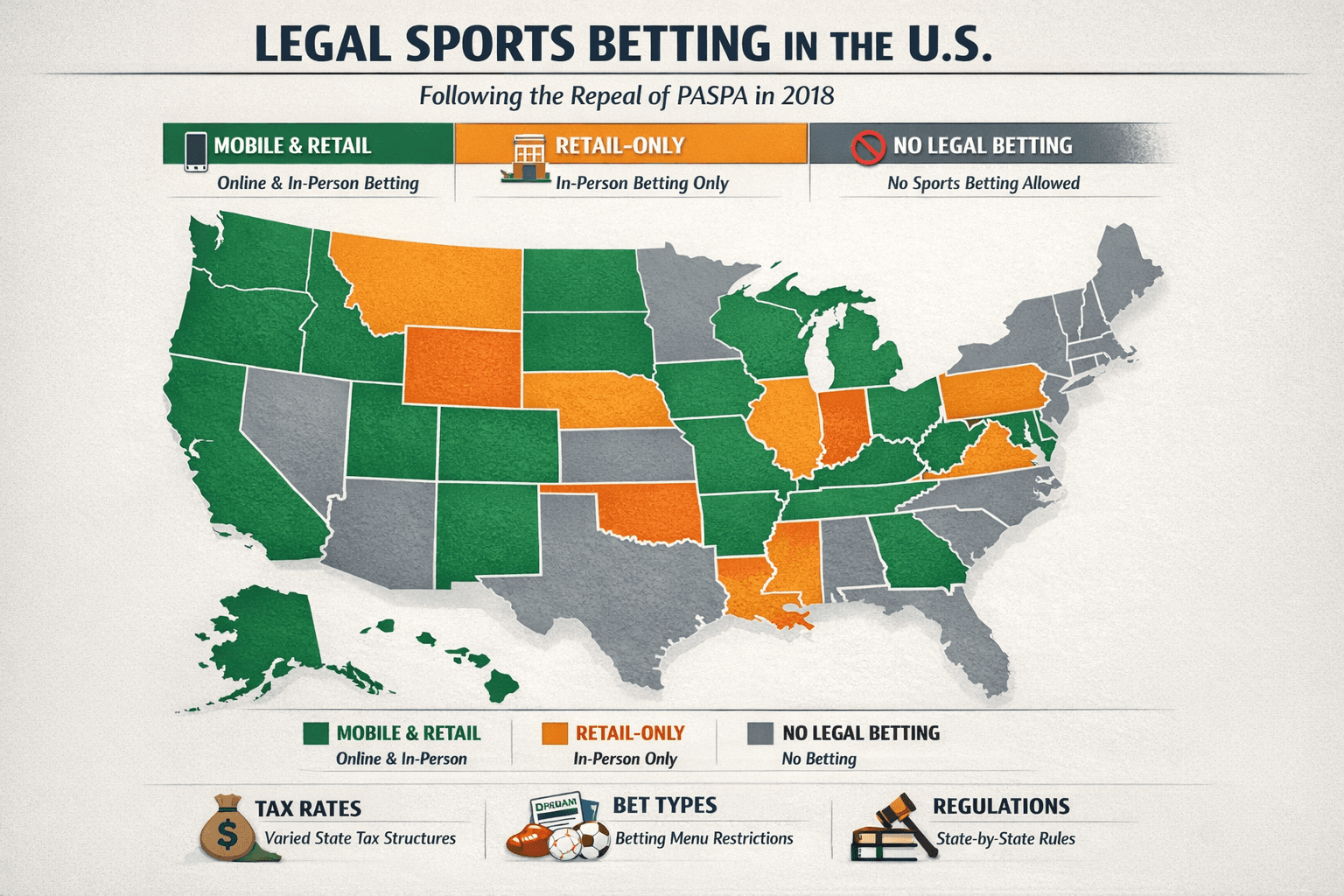
Legal Sports Betting States: 2026 Definitive Sharps Guide
The complete 2026 map of legal US sports betting. Analysis of mobile vs. retail markets, tax impact on odds, prop restrictions, and legislative forecasts.
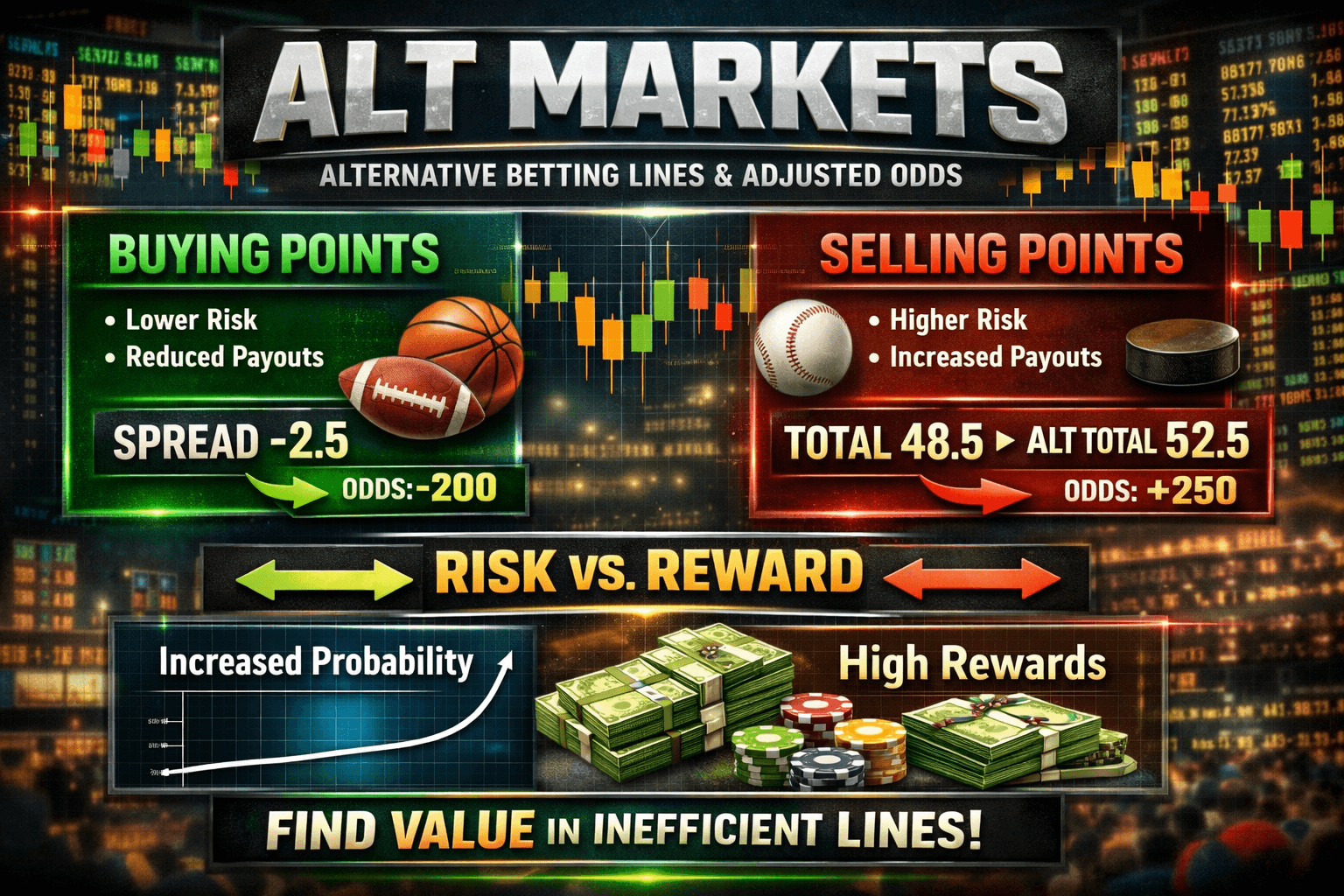
Alt Markets Explained: Exploiting Derivatives for +EV Betting
Master alternate betting markets. Learn how sharps exploit pricing inefficiencies in alt spreads, totals, and props to find edge beyond the main lines.
Ready to find your Edge?
Join thousands of smart bettors who have stopped guessing and started calculating. Access institutional-grade tools for the price of a standard wager.