Spread Meaning in Betting: The Sharp’s Guide to Handicapping

Key Takeaways
- The Breakeven Threshold: At standard -110 odds, a bettor must win 52.38% of their spread wagers to break even; anything less results in a loss due to the vigorish.
- Key Number Strategy: In the NFL, margins of victory cluster around 3 and 7. Securing a spread that captures these numbers (e.g., +3.5 or +7.5) provides significant mathematical equity.
- Closing Line Value (CLV): The most reliable metric of betting skill is not short-term profit, but consistently betting lines that are better than the market's closing price.
- The Cost of Buying Points: Purchasing half-points to move a spread is generally a negative expected value (-EV) play, as the premium charged by books exceeds the probability of the game landing on that specific number.
- Run Lines and Puck Lines: Unlike football or basketball, MLB and NHL spreads (run lines/puck lines) typically remain static at 1.5, with the payout odds fluctuating instead of the point margin.
Definition
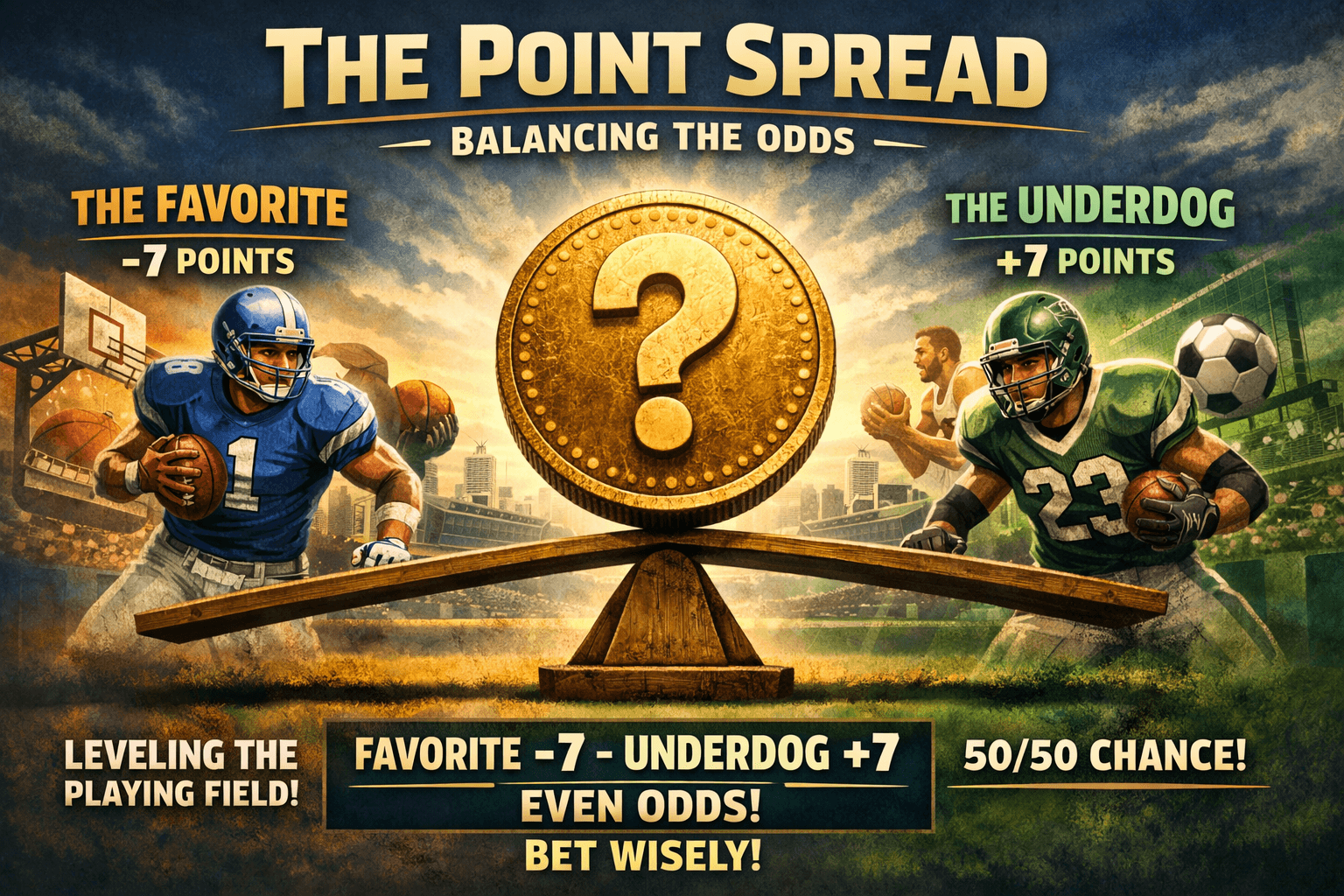
The point spread is a handicap created by oddsmakers to equalize the betting action between two unbalanced teams. By deducting points from the favorite and awarding them to the underdog, the sportsbook aims to create a 50/50 proposition, turning a sporting event into a coin flip priced at a premium.
Table of Contents
In the ecosystem of sports betting, the moneyline is the question of "who"; the point spread is the question of "how much." For the casual bettor, the spread is merely a way to make a lopsided game interesting. For the sharp, the spread is a market inefficiency waiting to be exploited.
Understanding the spread meaning in betting requires looking past the simple arithmetic of adding or subtracting points. It requires understanding market equilibrium, the cost of doing business (the vig), and the mathematical thresholds required to turn a long-term profit. This guide deconstructs the point spread from the perspective of a data-driven bettor.
The Market Mechanics of the Point Spread#
At its core, a point spread is a secondary market. The primary market is the game itself (who wins). The spread creates a synthetic market where the objective is not to predict the winner of the contest, but to predict the margin of victory relative to the market's expectation.
Sportsbooks do not set spreads to predict the exact score of a game. They set spreads to divide the betting public. Ideally, a bookmaker wants equal money on both sides of the wager (the favorite and the underdog). If the action is balanced, the bookmaker carries no risk and simply collects the vigorish—the commission charged on losing bets.
However, in the modern era of high-frequency trading and algorithmic modeling, lines are sharper than ever. The "opening line" is often based on power ratings derived from historical data, but the "closing line" is the result of price discovery—the collective wisdom of the sharpest bettors in the world hammering the line until it settles at a true probability.
Reading the Line
When you view a spread on a betting board, you will see two distinct components: the handicap (the spread) and the price (the odds).
- Kansas City Chiefs -3.5 (-110)
- Baltimore Ravens +3.5 (-110)
In this scenario:
- The Favorite (-): Kansas City must win by 4 points or more.
- The Underdog (+): Baltimore can win outright or lose by exactly 1, 2, or 3 points.
The -110 indicates the price. You must risk $110 to win $100. This pricing is standard, but it is not static. A spread of -3.5 (-115) implies a higher probability of the favorite covering than a spread of -3.5 (-105).
The Math Behind the -110 Price#
To understand spread betting, you must understand the breakeven percentage. Because the standard price is -110 (or 1.91 in decimal odds), a 50% win rate is a losing strategy.
The formula to calculate the breakeven percentage on a -110 bet is: \110 / (110 + 100) = 0.5238$$
You must win 52.38% of your spread bets just to break even. Any win rate below this number loses money to the house edge (the vig). A professional sports bettor hitting 55% on spreads is considered world-class.
This highlights why Line Shopping is the single most effective tool for increasing ROI. If you can find a spread priced at -105 instead of -110, your breakeven point drops to 51.2%. Over a sample size of 1,000 bets, the difference between -110 and -105 is the difference between a losing season and a profitable one.
Key Numbers: The NFL's Unique Geometry#
Not all points are created equal. This is most prevalent in the NFL, where scoring increments (3 points for a field goal, 7 for a touchdown) create clusters in the final margins of victory. These clusters are known as "Key Numbers."
The Power of 3 and 7
Historically, roughly 15% of all NFL games end with a margin of victory of exactly 3 points. About 9-10% end with a margin of 7 points.
- Betting -2.5 vs. -3.5: This is a massive canyon in value. If the favorite wins by a field goal (3 points), the -2.5 bettor wins, while the -3.5 bettor loses.
- Betting +7.5 vs +6.5: The +7.5 bettor survives a touchdown loss; the +6.5 bettor does not.
Sophisticated bettors will often pay a premium (buy points) or wait for market movement to capture these key numbers. However, blindly buying points is a mathematically flawed strategy if the cost (the juice) exceeds the probability of the game landing on that specific number.
The Hook, The Push, and The Buy#
The Hook
The ".5" attached to a spread is called the "hook." It eliminates the possibility of a tie (push). For bookmakers, the hook is a tool to force a decision. For bettors, the hook is often the difference between a win and a voided bet. In NBA betting, where scoring is frequent and fluid, the hook is less critical than in the NFL, but it still represents meaningful equity.
The Push
If the spread is a whole number (e.g., -3) and the favorite wins by exactly 3, the bet is a push. No money is lost or gained; the original stake is returned. Many sharps prefer whole numbers to avoid losing on the hook, effectively turning a potential loss into a void.
Buying Points: A Trap for the Unwary?
Most sportsbooks allow you to "buy" points, moving the spread in your favor in exchange for worse odds. For example, moving a line from -3.5 (-110) to -3 (-130).
Is it worth it? Generally, no. The cost sportsbooks charge for buying points usually exceeds the true mathematical value of that half-point. For example, in the NFL, the probability of a game landing on 3 is high, so books charge a premium to move off it. In sports with high variance like college basketball, buying points is almost strictly -EV (negative expected value).
Advanced Spread Concepts#
Closing Line Value (CLV)
If you bet the Green Bay Packers at -6.5 on Tuesday, and by kickoff on Sunday the line has moved to -7.5, you have generated Closing Line Value. You hold a ticket that is 1 point better than the market's final assessment of the game.
Consistently beating the closing line is the truest indicator of a sharp bettor. Even if that specific bet loses, beating the closing line proves that your process is identifying value before the market corrects itself.
Middling
Middling is an arbitrage strategy that capitalizes on significant line movement.
- Bet 1: You bet the Underdog at +7.5 early in the week.
- Bet 2: The favorite is steamed up, and you bet the Favorite at -5.5 later in the week.
The Middle: If the favorite wins by 6 or 7 points, you win both bets. If the result falls outside that window, you win one and lose one, usually only costing you the vig. It is a low-risk, high-reward shot at a double win.
Run Lines and Puck Lines
In low-scoring sports like Baseball (MLB) and Hockey (NHL), standard point spreads are replaced by fixed spreads, typically set at 1.5.
- MLB Run Line: Favorite -1.5 / Underdog +1.5
- NHL Puck Line: Favorite -1.5 / Underdog +1.5
Unlike football or basketball where the spread moves (e.g., -4 to -5), in baseball and hockey, the spread usually stays static at 1.5, while the odds move drastically (e.g., -1.5 at +160 might move to +140). This fundamentally changes the handicapping approach, shifting the focus to win probability and payout variance rather than margin of victory distribution.
Spreads vs. Correlation#
In modern analytics, understanding how the spread correlates with other markets is vital, especially for Same Game Parlays (SGPs).
There is a natural negative correlation between a heavy favorite covering a large spread and the game going "Under" the total, although this varies by sport. If a team is favored by -14.5, they likely need to score a significant amount of points to cover, which correlates to the "Over."
Using tools like a Correlation Matrix can help visualize these relationships, preventing you from building parlays that contradict the game script required for your spread bet to win.
When to Bet the Spread vs. The Moneyline#
A common dilemma for bettors is choosing between the spread and the moneyline.
- The Favorite Dilemma: If you like a heavy favorite (-400 moneyline), the return is negligible. The spread allows you to get -110 pricing on a superior team, but introduces the risk of a "backdoor cover" (where the underdog scores late to lose by less than the spread).
- The Underdog Dilemma: If you like an underdog to cover +3.5, you likely believe they have a good chance to win outright. A +3.5 spread pays -110, but the moneyline might pay +145.
- Sharp Strategy: Many pros will split their unit. If they like a dog at +7, they might put 70% of their wager on the spread (+7) and 30% on the moneyline ("sprinkling the moneyline") to capture the upside of the outright win.
The Role of Automated Tools#
Handicapping spreads manually involves tracking injuries, weather, referee tendencies, and power ratings. However, the market moves fast. By the time news breaks on Twitter, the algorithms have likely already adjusted the line.
To compete, bettors utilize software to track inefficiencies. Our Live +EV Feed scans hundreds of sportsbooks in real-time to identify instances where a specific book is offering a spread that deviates from the sharp consensus. If the entire market is at -6.5 and one book is lingering at -6, that is a mathematical edge derived purely from market latency.
Summary#
The point spread is the great equalizer. It turns blowouts into nail-biters and transforms sports betting from a game of picking winners into a game of pricing probability.
To succeed in spread betting:
- Respect the math: Understand that -110 requires a 52.38% strike rate.
- Shop for lines: A half-point difference is massive in the long run.
- Track your CLV: Ensure you are consistently beating the market close.
- Know your Key Numbers: Especially in the NFL.
Mastering the spread is not about knowing which team is better; it is about knowing which number is wrong.
Frequently Asked Questions
What does it mean to cover the spread?▼
What happens if the score lands exactly on the spread?▼
Is it better to bet the spread or the moneyline?▼
What is the hook in spread betting?▼
What is -110 in spread betting odds?▼
Related Articles
Football Squares Rules: The Definitive Analytics & Strategy Guide
Master football squares with this data-driven guide. Learn the rules, optimal number probabilities, auction valuation strategies, and how to gain an edge in high-stakes pools.
.png&w=3840&q=75)
Middling in Sports Betting: The Math Behind the Most Profitable Play
Master the art of middling. Learn how to exploit line movements to create risk-free windows where you win both sides of a bet. Advanced strategy for sharps.
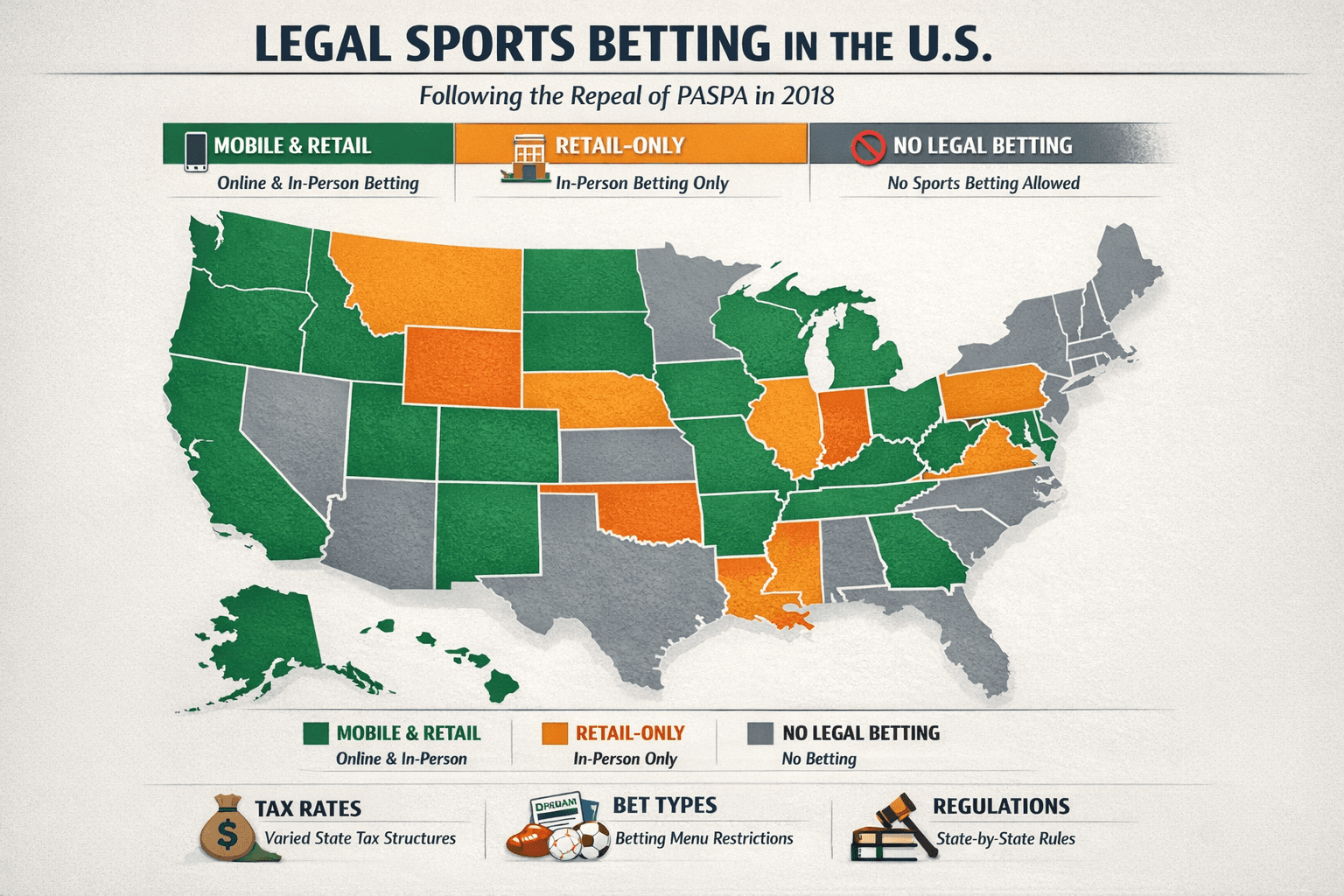
Legal Sports Betting States: 2026 Definitive Sharps Guide
The complete 2026 map of legal US sports betting. Analysis of mobile vs. retail markets, tax impact on odds, prop restrictions, and legislative forecasts.
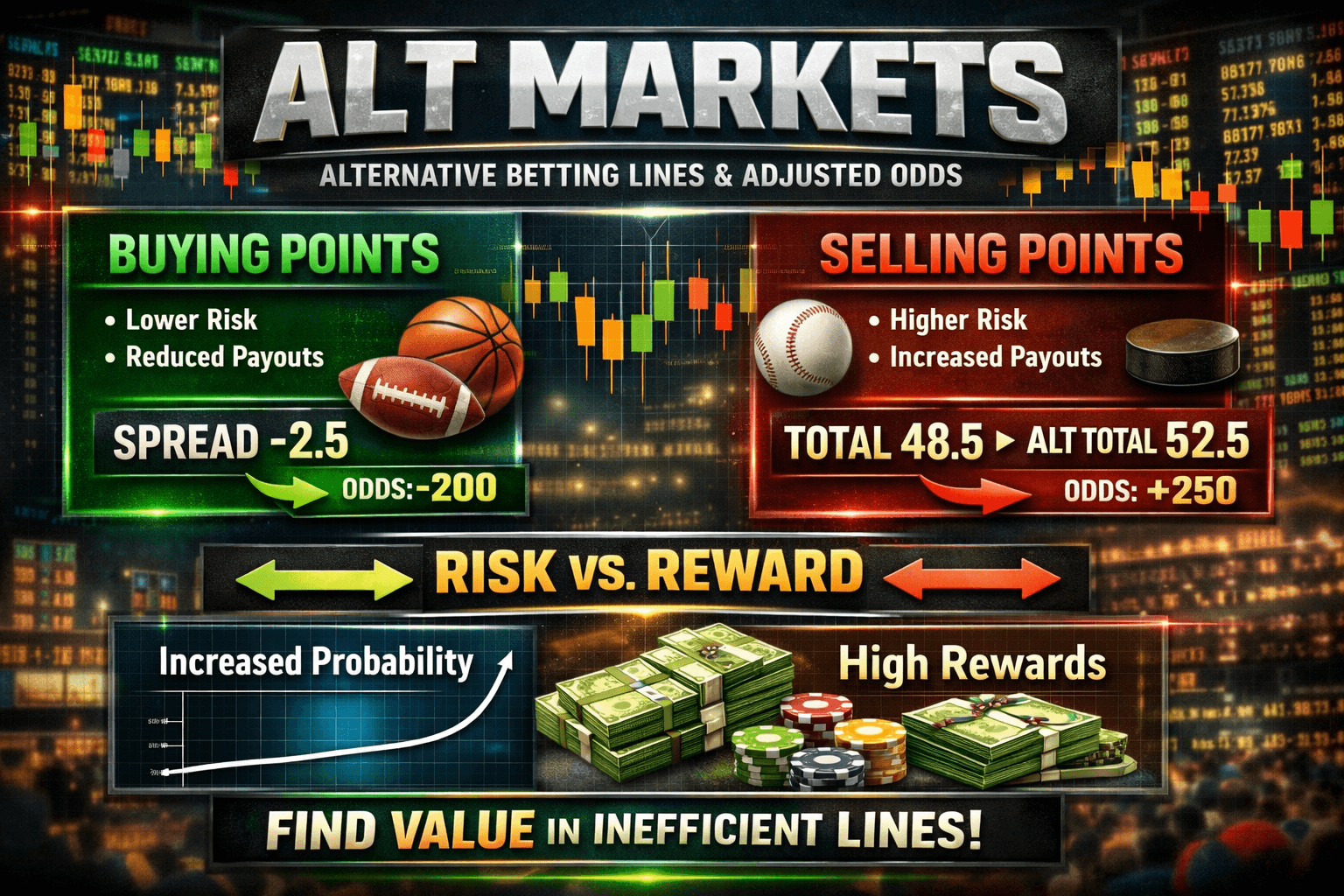
Alt Markets Explained: Exploiting Derivatives for +EV Betting
Master alternate betting markets. Learn how sharps exploit pricing inefficiencies in alt spreads, totals, and props to find edge beyond the main lines.
Ready to find your Edge?
Join thousands of smart bettors who have stopped guessing and started calculating. Access institutional-grade tools for the price of a standard wager.